


The white, clumpy curd was all the fashion within the early Twentieth century, but it surely has just lately made a comeback. Younger persons are placing it in every part from dips and pastries to ice cream. Whereas as soon as pushed as a meat different through the First World Warfare, its present craze appears to be rooted in Zoomers’ quest to attain #fitlife. So, what makes cottage cheese the protein-packed star of the second?
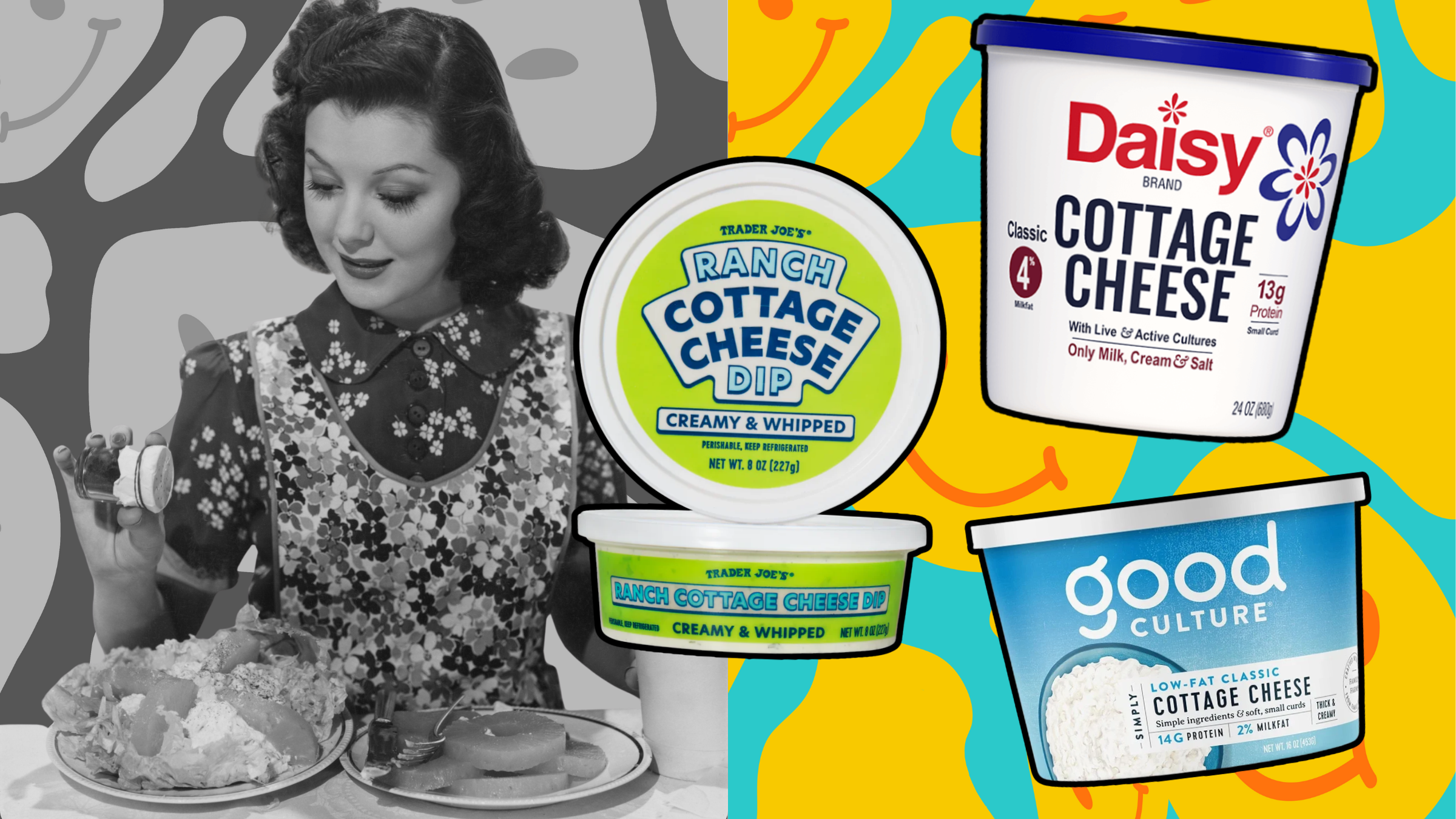
(Photograph: Left: Canadian-American actress Ann Rutherford (1917 – 2012) prepares herself a pineapple and cottage cheese salad sprinkled with paprika, circa 1939, Archive Images/Getty Pictures; Proper: Cottage cheeses: Dealer Joe’s, Daisy Model, Good Tradition; Design: Ayana Underwood)
Revealed August 6, 2025 03:00AM
I’ve a confession: in the midst of my 75 Arduous spiral—a social media-sanctioned self-optimization grind disguised as a health problem—I made queso. Not simply any queso. Cottage cheese queso. This can be a sentence I by no means thought I’d write.

I began the problem this previous February—partly to beat the winter blues within the Northeast, and partly as a result of I wanted a reset after taste-testing one too a lot of Santa’s cookies. I used to be dedicated to mentioned problem. This meant: doing two 45-minute workouts (a minimum of one among them open air), studying ten pages of a nonfiction e-book, and consuming a gallon of water . . . every day. Most intimidatingly, I used to be supposed to stay to a weight-reduction plan of my selecting. I went all in: HIIT coaching, 4.5-mile runs, Turning into Supernatural queued up on my e-reader, and a squeaky-clean keto plan that had me consuming natural, grass-fed (and grass-finished) beef that I may barely afford. I tracked macros and thought of electrolyte ratios. I had come to phrases with the truth that I’d develop into somebody who used the time period “electrolyte ratios” in informal dialog.
After which I burned out.
Someplace round Day 42, I traded mountain climbers for Yin Yoga. I prioritized taking lengthy walks, watching white-tailed rabbits hopping alongside the estuary close to my dwelling in Boston, Massachusetts, over chasing yesterday’s private finest. The weight-reduction plan? That crumbled once I tried to justify the price of avocados and eggs and failed. (Inside the final 12 months, the worth of a single avocado rose by 75 %, and the same old three bucks I’d spend on a carton of eggs changed into 5.)
Nonetheless, I wished to eat effectively(ish), which for me, means protein-heavy, low-effort, and ideally not financially ruinous. So, like several overstimulated elder millennial attempting to keep away from resolution fatigue (and put on sunscreen, and hydrate, and bear in mind to name mother), I turned to Instagram.
Welcome @KetoSnackz to the chat. With 3.5 million followers, Rick Wiggins shares fast, high-protein recipes meant to fulfill cravings whereas staying protein-powered. His creations regarded suspiciously straightforward. His voice was refreshingly monotone. I used to be in.
As I scrolled, one ingredient saved popping up, an ingredient I discovered personally affronting: cottage cheese. It was white and lumpy. It was moist. It was in all places. Rick blended it into pizza crusts, brownies, and pancakes. And it wasn’t simply on Rick’s web page. TikTok, too, had totally surrendered to the curd—which was complicated. As a result of for me, I by no means noticed it in my Caribbean family rising up. My dad and mom didn’t eat it. We didn’t cook dinner with it. To borrow from Mariah Carey: I don’t know her.
So once I made queso out of it (blended with cheddar, cream, taco seasoning, and sizzling sauce) and served it to a pal whereas hanging out, I didn’t inform them what was in it. They appreciated it. Known as it “hearth.” Then I broke the information.
They checked out me like I’d confessed to placing mayonnaise in brownies: “Wait . . . like, actual cottage cheese?”
“Sure. From a bath. Purchased on goal.”
I used to be stunned, too, as a result of the queso was, the truth is, hearth. However I used to be additionally curious. As a result of how did goat cheese’s unhappy, curdled step-cousin develop into America’s latest protein-packed heartthrob?
I. TikTok, however Make It Clumpy
In April 2023, holistic nutritionist Lainie Kates—@lainiecooks on TikTok and one of the creators credited for the renewed curiosity in cottage cheese—posted a high-protein peanut butter cheesecake “ice cream” recipe. In it, she blended cottage cheese, peanut butter, chocolate chips, and maple syrup. Froze it. Ate it. Her video went viral. The web was flooded with cheesecake bowls, ranch dips, and “protein donuts”—most of which starred cottage cheese. It didn’t matter that the feel was off-putting. It blended effectively. It hit macros. That was sufficient.
Simply this month, Dealer Joe’s dropped Ranch Cottage Cheese Dip. Good Tradition, a model began in 2015, was actually born out of the desire to deliver a revamped, better-tasting, and more healthy model of cottage cheese to the general public. Just a few weeks in the past, they put out a meme-laden statement on Instagram saying that they’ll’t sustain with the demand for his or her iconic cottage cheese, confirming the cheese’s renewed reputation.

The message? That is meals you eat as a result of it’s good for you—crafted with “good-for-you-ingredients,” made with solely “the good stuff,” and “a versatile bit of dairy capable of providing protein and texture.” That’s how the manufacturers framed it. And if the messaging sounds acquainted, that’s as a result of we’ve heard it earlier than.
II. A Quick Historical past of a Lengthy Shelf Life
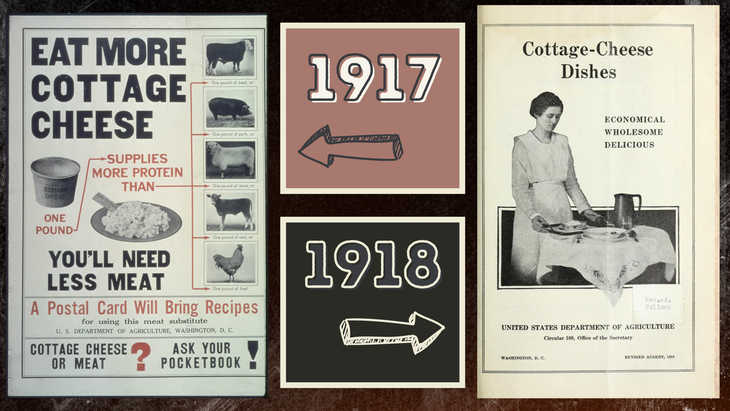
Within the early 1900s, the U.S. had an issue: meat was scarce throughout World Warfare I. To assist preserve it, the U.S. Division of Agriculture promoted dairy in its place. Posters inspired individuals to “Eat More Cottage Cheese.” It wasn’t only a suggestion; it was patriotism.
By the Nineteen Fifties, cottage cheese had migrated from the warfare effort to weight-loss plans. It was low in fats, excessive in protein, and flavorless sufficient to keep away from overindulgence. You possibly can measure it. You (in all probability) wouldn’t overeat it. Thus, it was superb for calorie counting.
That’s proper across the time when the “diet plate” made its solution to America’s diner menus—normally a scoop of cottage cheese, a hoop of canned peach or sliced tomato, possibly a wedge of iceberg lettuce. It wasn’t actually a meal. It was extra of a efficiency. A solution to present you have been being good. These plates lingered effectively into the seventies and eighties, ultimately evolving into the “Lite” menu I bear in mind seeing at Lengthy Island diners throughout my childhood within the nineties. Identical scoop, identical canned fruit—simply rebranded for the subsequent technology of restraint.
By 1972, Individuals have been consuming about five pounds of cottage cheese per particular person every year. Even Richard Nixon was recognized to pair his with ketchup. YUM. He had such a lust for lactose, the truth is, that he reportedly requested cottage cheese at his 1969 inauguration dinner. And when he resigned from workplace in 1974? His closing White Home lunch was cottage cheese with pineapple and a glass of milk. A presidency bookended by curds.

III. Who Was It Actually For?
Not everybody was consuming it. Reasonably, not everybody was meant to be consuming it. Mid-twentieth-century meals campaigns primarily focused white, middle-class women. Cottage cheese got here with a message—eat this, keep skinny, keep stunning, keep in management.
Cottage cheese was bought as a democratic meals: low cost, accessible, wholesome. Nevertheless it by no means belonged to everybody.
Even when it confirmed up in authorities campaigns and college lunches, it wasn’t a staple in each dwelling. It merely didn’t catch on in lots of immigrant, Black, and working-class communities. A part of that was logistics. Cottage cheese requires refrigeration, contemporary milk, and a chilly distribution chain, not all the time accessible in rural or low-income areas.
Take a look at the adverts. White ladies in full make-up, smiling at tubs of cottage cheese like they’d simply invented it. One Eden Vale advert exhibits a nuclear household floating via a suburban utopia, touchdown at a desk set with cottage cheese salads and an enormous tomato. A Knudsen advert encompasses a flawless lady providing a bath of “VELVET creamed cottage cheese,” promising sweetness, lightness, and home perfection. Borden’s went all in: cartoon cows, crisp lettuce, and cottage cheese rings studded with peas and carrot sticks. No spice, no mess—only a rigorously styled portrait of management, home order, and cultural exclusion.
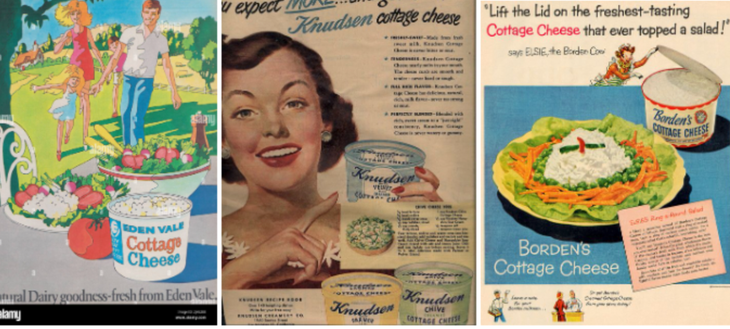
These photos weren’t impartial. They strengthened the message: that is who eats this, and that is the way you serve it. In her 2011 e-book, Food Is Love: Food Advertising and Gender Roles in Modern America, historian Katherine J. Parkin argues that mid-Twentieth-century meals promoting strengthened slim beliefs of femininity, pressuring ladies to equate thinness, home perfection, and household nourishment with private worth.
However the larger difficulty was style. Cottage cheese didn’t mirror the elements or textures of most non-white meals cultures.
My Caribbean household’s fridge, for instance, held sorrel, pepper sauce, and mango chutney, not clumps of dairy. So, once I introduced dwelling a container of Good Tradition to recreate my (self-proclaimed) well-known queso, they checked out it suspiciously. Then they requested what I deliberate to do with it. After I mentioned “queso,” they raised their eyebrows and sucked their enamel. They weren’t offended. Simply confused. It’s comprehensible as a result of the advertising by no means spoke to them. And it wasn’t designed to.
IV. Cottage Cheese Loses Its Steam
Even among the many individuals it was supposedly for, cottage cheese couldn’t maintain on.
By the Eighties, its reputation started to slide—quietly edged out by a brand new dairy star with smoother texture, stronger advertising, and fewer id points: yogurt. Excessive in protein, wealthy in backstory, and aggressively rebranded as a probiotic superfood, yogurt didn’t simply enter the chat—it took over the dialog.
Cottage cheese didn’t know the best way to compete. There have been no new codecs, no up to date flavors, no try and win over youthful consumers. It stayed in its huge previous tub, parked on the fridge shelf. In the meantime, yogurt was out dwelling its finest life—popping up as Go-Gurt at school lunchboxes, and with glass jars with foil lids in meal-preps. One grew to become a way of life product; the opposite stayed a buffet-line staple at your grandmother’s favourite salad bar.
The feel didn’t assist. In a 2012 examine printed within the Journal of Dairy Science, researchers discovered that texture was the largest barrier to cottage cheese acceptance, particularly amongst youthful shoppers. The graininess, visible lumpiness, and curdy mouthfeel turned individuals off, even when the fats and protein content material hit all the fitting numbers. Even variations labeled “low-fat” or “high-protein” couldn’t overcome the essential sensory mismatch. Individuals didn’t hate what it stood for. They only didn’t wish to eat it and really feel it on their tongues.
On the identical time, yogurt manufacturers have been investing in tales. Chobani was based by an immigrant entrepreneur who turned a struggling manufacturing facility right into a billion-dollar firm. Dannon constructed an entire marketing campaign round Georgian centenarians and the key to lengthy life. Yogurt had a standpoint. Cottage cheese didn’t also have a spokesperson.
By the 2010s, yogurt was outselling cottage cheese almost eight to 1. And cottage cheese wasn’t simply fading in market share—it was fading in reminiscence. It stopped being an expectation. For most individuals, it stopped being an choice.
So when it began trending once more—sneaking into dips, desserts, and TikTok reels—it felt much less like a comeback and extra like a glitch. Cottage cheese didn’t evolve. It was simply repurposed. And possibly that’s the clearest signal of its legacy: it survives not by being beloved however by being helpful.
V. Weight loss program Tradition, Rebranded
Right this moment’s cottage cheese wave nonetheless facilities on the identical values: management, effectivity, and self-regulation. The language modified, however the strain stayed. It’s not “keep skinny in your husband,” it’s “optimize your macros.”
The look modified, too. It’s not a scoop on a peach slice. It’s whipped, blended, hidden in dips, ice lotions, and sauces. It’s in a glass bowl, drizzled with chili crisp and tagged #highprotein on an influencer’s “What I Eat in a Day” reel. However the efficiency is similar: eat this to show you’re doing the work.
We used to depend energy (some individuals nonetheless do). Now we depend macros. We used to tally Weight Watchers factors. Now we use apps and health watches to trace energy burned. We used to purpose for skinny. Now we are saying lean.
Mixing till easy is a requirement. The feel continues to be an issue, it’s only one we’re now anticipated to repair. And the manufacturers know that.
Fashionable cottage cheese branding sells operate first: intestine well being, low carb, excessive protein. The packaging usually mirrors wellness tendencies—clear strains, block fonts, impartial palettes—the identical aesthetic you’d discover in a Scandinavian furnishings showroom. Some lean into compliance tradition, highlighting Whole30- or keto-friendly elements. Others soften the message by including taste cues, however even then, pleasure is normally positioned as a bonus, not the purpose.
Take Dealer Joe’s ranch cottage cheese dip: “a fantastically flavorful dip,” sure—however solely after mentioning its protein content material, versatility, and use in pancakes, pasta, and frittatas. The indulgence comes with an asterisk. It’s not simply tasty—it’s useful.
I’ve tried the Good Tradition stuff. It’s positive. It blends effectively. However cottage cheese itself nonetheless wanted a rebrand—not as a result of it was forgotten, however as a result of it was by no means really beloved. It has to justify itself as a result of it could possibly’t depend on taste or nostalgia.
Possibly that’s why it matches so effectively into trendy wellness tradition. We’ve changed calorie charts with meal-prep hacks. However the purpose stays: Construct a greater physique. Be a greater particular person. Keep in management.
Cottage cheese nonetheless matches that mould. Identical to it all the time has.
VI. Reflection: The Cheese That Refused to Stop
I didn’t count on to finish up right here—with a half-used container of cottage cheese in my fridge and a brief checklist of recipes I’m not embarrassed to share. I nonetheless don’t adore it. I don’t crave it. However I’ve realized to respect it.
That respect got here from wanting again. Cottage cheese didn’t development as a result of a TikToker froze it right into a dessert. It’s been round for over a century, all the time displaying up once we determine meals ought to show one thing. Warfare, weight reduction, wellness—cottage cheese exhibits as much as work. (FYI: I clarify some much more extraordinary makes use of for cottage cheese within the video under.)
As soon as it was about thrift. Then self-denial. Now it’s optimization. However the message doesn’t change: If you eat this, you’re attempting. You’re disciplined. You’re doing it proper.
And that’s why it nonetheless makes individuals uncomfortable.
You don’t have to elucidate why you want donuts. However cottage cheese? You want a motive. Excessive protein. Intestine-friendly. You don’t simply eat it, you earn it.
Whether or not I’ve earned it or not, I’ve blended it into queso. Stirred it into pancakes. Eaten it—very reluctantly—by the spoonful. As soon as. I’m not a fan.
However I’m not towards it anymore, both.