


There’s no scarcity of chatter about how China is poised to dominate the worldwide automotive business, particularly within the electrical area. However is all of it noise, or ought to the established carmakers be dropping sleep? Maybe a little bit of each. For now, it’s wise to take the hype with a pinch of salt — but there’s no denying {that a} handful of those new manufacturers genuinely know what they’re doing.
A lot of the finest Chinese language EVs have but to succeed in European shores, with producers maintaining their flagship fashions for the home market. However it’s solely a matter of time earlier than that adjustments. So, earlier than they start flooding Western showrooms, listed here are 5 of essentially the most spectacular Chinese language electrical automobiles you’ve most likely by no means heard of — plus an honourable point out that already has clients queuing for years.
Xiaomi SU7 Extremely
When Chinese language tech behemoth Xiaomi introduced it was getting into the automotive market, the world didn’t take a lot discover. In spite of everything, huge names like Apple and Dyson had tried and failed. However Xiaomi didn’t flinch — and when its first mannequin, the SU7, lastly launched, it made a direct affect.
Developed in partnership with battery big CATL, the four-door electrical saloon immediately grabbed consideration. It borrowed a few of Tesla’s formulation — quick, minimalist, software-led — however targeted simply as a lot on refinement, dealing with and construct high quality. It was an EV aimed not simply on the tech crowd, however at individuals who truly take pleasure in driving.
Then got here the SU7 Extremely: a full-bore efficiency model that smashed the Porsche Taycan’s Nürburgring lap report with time to spare. Producing 1,527bhp, a high velocity of 217mph and a 0–62mph time of underneath two seconds, it’s absurdly fast. But it additionally rides superbly and feels solidly engineered. With Xiaomi planning a European launch inside two years, the legacy gamers needs to be paying shut consideration.
Nio ET9
If Xiaomi burst onto the scene, Nio took a slower, extra deliberate route — however the outcome has been equally vital. Nio was one of many first clean-sheet Chinese language automotive manufacturers to merge the precision of client electronics with luxurious automotive design. It helped create the blueprint for a brand new technology of premium Chinese language EVs.
Smooth, easy and tech-heavy, Nio’s automobiles emphasise restraint and class. Since launching in Europe, the corporate has constructed a loyal following, even when gross sales volumes stay modest. The ET9, nonetheless, is a special beast altogether. Designed completely for China (for now), it’s a fastback rival to the Mercedes S-Class, full of know-how however priced far decrease.
It options absolutely lively suspension, rear-wheel steering and Nio’s trademark battery-swapping system — permitting a full recharge in minutes relatively than hours. The model additionally leads the best way in LiDAR-assisted autonomous driving, a area the place Western producers are nonetheless catching up. The ET9’s mixture of design, innovation and practicality sums up why Chinese language EVs are now not a punchline — they’re a warning shot.
Li Auto Mega
Can a van be aspirational? In China, the reply is a convincing sure. The Li Auto Mega proves {that a} individuals provider may be each cool and opulent — a type of personal jet for the street. It’s big, futuristic and quick, able to 0–60mph in round 4 seconds.
Inside, flexibility is essential. It could actually function a high-end chauffeured shuttle or the last word household automotive, full with leisure screens and extra legroom than most dwelling rooms. The inside is minimalist however full of intelligent touches: monumental digital shows, a glass-heavy cabin that floods with gentle, and seats that warmth, cool, therapeutic massage and even recline into zero-gravity mode.
Regardless of its dimension, the Mega’s aerodynamics are distinctive, making it surprisingly environment friendly. It’s an audacious imaginative and prescient of what luxurious journey would possibly seem like within the EV period — half spaceship, half penthouse suite — and a reminder that Chinese language manufacturers are redefining classes Western automakers have lengthy deserted.
Avatr 11
Avatr is among the most intriguing Chinese language manufacturers to emerge in recent times. Created by the Changan conglomerate with assist from Huawei, it’s pitched on the excessive finish of the market and led by an ex-BMW designer — a element that reveals within the automobiles’ crisp strains and daring proportions.
The Avatr 11 (pronounced “one-one”) is a big luxurious fastback concentrating on the Mercedes S-Class and Lucid Air. It’s arguably one of many boldest designs of the lot: no rear window, a panoramic windscreen that extends over the roof, and a floating cabin that appears prefer it’s been lifted straight from a sci-fi film.
Inside, it’s simply as distinctive — a minimalist digital dashboard set inside sweeping architectural types and ambient lighting that feels theatrical relatively than gimmicky. It won’t boast the acute efficiency figures of a Xiaomi or BYD, however as a design assertion, it’s unmatched. Avatr proves China isn’t simply copying anymore; it’s confidently setting its personal aesthetic route.
Denza D9
Denza is the premium arm of BYD — an organization that quietly grew to become the world’s greatest EV producer. Based as a battery maker greater than 4 many years in the past, BYD’s technical depth now underpins every part it builds. Denza, very similar to Lexus is to Toyota, exists so as to add luxurious polish to that engineering energy.
The D9 showcases this completely. It’s a full-size MPV loaded with innovation, from rear-wheel steering and adaptive damping to a torque-vectoring system that may ship energy to particular person wheels for exact low-speed manoeuvres.
Inside, Denza takes extra to a brand new stage. Virtually each floor strikes or adjusts electrically — from heated armrests to powered window blinds. The eye to element borders on obsessive. It’s decadent but in addition showcases China’s rising functionality for craftsmanship and end. As soon as thought-about the weak hyperlink in Chinese language manufacturing, inside high quality is now certainly one of its greatest strengths.
Xpeng P7
Whereas most Chinese language EVs chase sheer velocity and tech overload, the Xpeng P7 takes a extra refined route. Roughly the scale of a Porsche Taycan, it’s designed round steadiness and driver really feel — qualities as soon as absent from Chinese language automobiles.
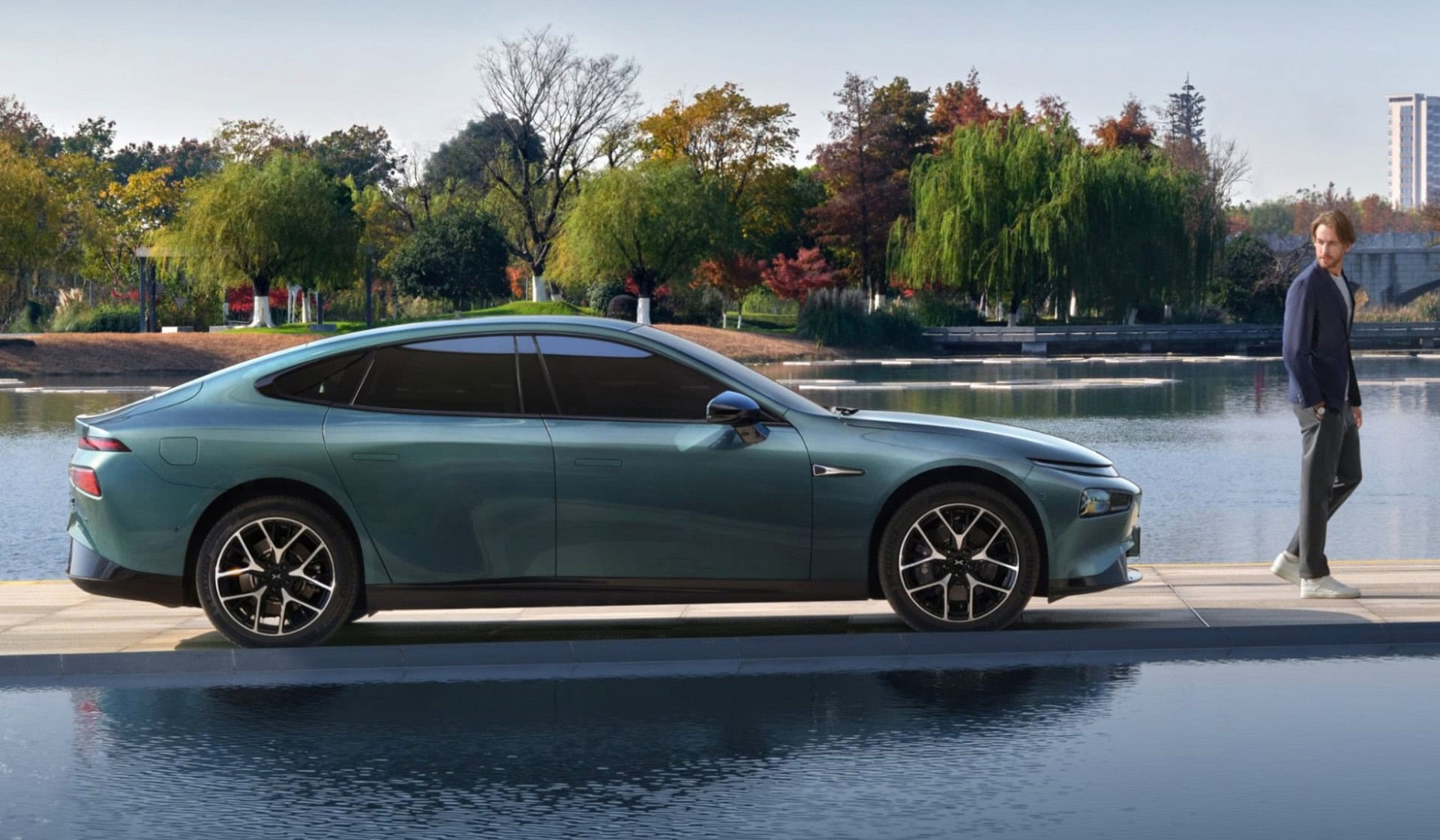
The P7’s chassis tuning was overseen by engineers with European expertise, and it reveals: the steering is sharp, the suspension composed, and the trip genuinely refined. Its design is refreshingly restrained, too — glossy and cohesive, with delicate hints of traditional grand tourers just like the Rover Vitesse or Ferrari Daytona in its silhouette.
Inside, it’s clear and tech-forward with out feeling chilly. Xpeng has managed to inject a way of soul into the EV expertise — one thing even established manufacturers nonetheless battle to realize.
Honourable Point out: Xiaomi YU7
If the SU7 proved Xiaomi may construct a automotive, the YU7 reveals it may possibly construct an empire. The SUV model of the model’s breakout saloon takes every part that labored in regards to the unique and packages it in a extra trendy, family-friendly type.
It’s already a runaway success in China, with ready lists stretching years. Its styling won’t be revolutionary — there’s greater than a touch of Ferrari Purosangue and McLaren in its strains — however clients clearly don’t thoughts. It’s quick, luxurious and completely tuned to trendy tastes.
With Xiaomi’s European enlargement plans nicely underway, anticipate the YU7 to develop into one of many model’s first international hits. It’s much less a case of if these automobiles arrive, and extra when — and judging by the velocity at which Chinese language producers are evolving, the reply is before you assume.