

Printed October 29, 2025 02:45PM
Andreas Almgren, who streaked to a brand new European half-marathon file of 58:41 earlier this month, swears by it. So does Cole Hocker: “Yeah, I ripped a shot earlier than the 5K,” he said after taking gold in that occasion on the observe and area world championships in Tokyo in September. Mads Pederson, former world biking champion, credit it with spurring him to his best-ever 90-minute trip.
“It” is a complement referred to as Nomio, a concentrated shot extracted from broccoli sprouts that has emerged as the most popular new performance-enhancer amongst elite endurance athletes (as Velo’s Jim Cotton recently reported). The tagline printed on the field and splashed throughout the company’s website is that it’s “a pure compound that reduces lactate buildup throughout intense bodily exercise.” The promise to decrease lactate is paying homage to claims about baking soda, which has swept by means of endurance sport over the previous few years. That’s what’s drawing athletes in—however the precise science behind Nomio, preliminary although it stays, suggests a extra difficult and maybe extra attention-grabbing image.
Nomio as a Lactate Fighter
The lively ingredient in Nomio is isothiocyanates, or ITCs, that are present in cruciferous greens akin to broccoli, kale, and cabbage. The product was developed by scientists at Sweden’s Karolinska Institute and the Swedish Faculty of Sport and Well being Sciences—by a few of the identical scientists who did pioneering analysis into the endurance-boosting skills of the nitrates present in meals akin to beets. Beet juice has turned out to be one of many only a few purported sports activities dietary supplements backed by strong proof, one among simply 5 that the Worldwide Olympic Committee gives a thumbs-up to. That parallel is encouraging: possibly one other vegetable extract is able to be a part of the listing.
The claims on the Nomio web site are all around the map. Not solely will it scale back lactate, it would additionally decrease oxidative stress and irritation, improve coaching response to create extra mitochondria, and speed up post-exercise restoration. Oh, and it’ll additionally make your legs really feel lighter. That sounds suspiciously like a magical capsule that makes all of your needs come true—a discount at $28 for 4 doses.
The “Science” tab on Nomio’s web site provides three references for these claims:
The primary is a 2023 study led by Filip Larsen, one among Nomio’s co-founders, by which volunteers took a shot of Nomio (or a placebo) twice a day for per week whereas finishing intense interval exercises on an train bike on daily basis. The complement decreased oxidative stress and lowered lactate ranges throughout train, improved regulation of blood glucose, and prolonged time to exhaustion by about 12 p.c in a VO2 max check (although it didn’t really change VO2 max).
The second research hasn’t but been revealed, however is obtainable as a preprint whereas it undergoes peer assessment. It’s additionally from Larsen’s group, led by Michaela Sundqvist. This time it’s a one-shot check: take a broccoli shot, then three hours later do some train. As soon as once more, lactate ranges had been decrease at a given velocity or energy output in comparison with with a placebo.
The third study is a bit more arcane. It concerned stimulating particular person muscle fibers in a check tube to simulate train. Within the presence of ITCs, there was a dramatic enhance in coaching response resulting in decrease oxidative stress and the creation of extra mitochondria, the mobile “powerhouses” which are key to cardio train. This was an unbiased research by David Hood, a distinguished muscle physiologist at York College. And it actually was unbiased; once I contacted Hood, he’d by no means heard of Nomio. However he confirmed the research’s findings: “The outcomes had been dramatic for us,” he mentioned. His group is now operating a coaching research in stay mice with and with out ITCs, with outcomes anticipated in January.
These research are definitely suggestive, however two issues are lacking, from my perspective. One is direct proof that ITCs improve efficiency. No person wins a medal for greatest mitochondria or lowest lactate ranges; all we actually care about is whether or not the complement makes athletes quicker. The opposite is a coherent rationalization of why we should always anticipate ITCs to make athletes quicker. I’ll come again to the query of proof beneath, however let’s begin with the why.
Nomio’s Different Origin Story
Once I received in contact with Larsen (whose analysis I’ve written about previously), he defined the evolution of his fascinated by ITCs in a means that made extra sense to me. It’s not about lactate, or at the least it wasn’t initially.
In Larsen’s telling, the place to begin was a 2021 study on overtraining. That they had volunteers progressively ramp up their coaching over the course of three weeks, with the ultimate week pushing them into overtraining. At that time, their mitochondria had been now not working as properly, their blood sugar management was compromised, and so they had been slower. “This aligns properly with how athletes usually really feel after they practice more durable than they’ll adapt: muscle mass really feel heavy and unresponsive, and so they don’t get well between periods as they need to,” Larsen says. The wrongdoer gave the impression to be a signaling pathway referred to as Nrf2, which is a key regulator of the physique’s antioxidant defenses and (as David Hood and others have proven) the way it responds to coaching.
With these ends in thoughts, Larsen and his staff questioned whether or not boosting Nrf2 may counteract the consequences of overtraining. There was already a sturdy literature exhibiting that ITCs increase Nrf2. “Primarily based on that,” Larsen says, “we merely requested: ‘What occurs if we give individuals ITC (from broccoli sprouts) whereas they practice actually laborious?’”
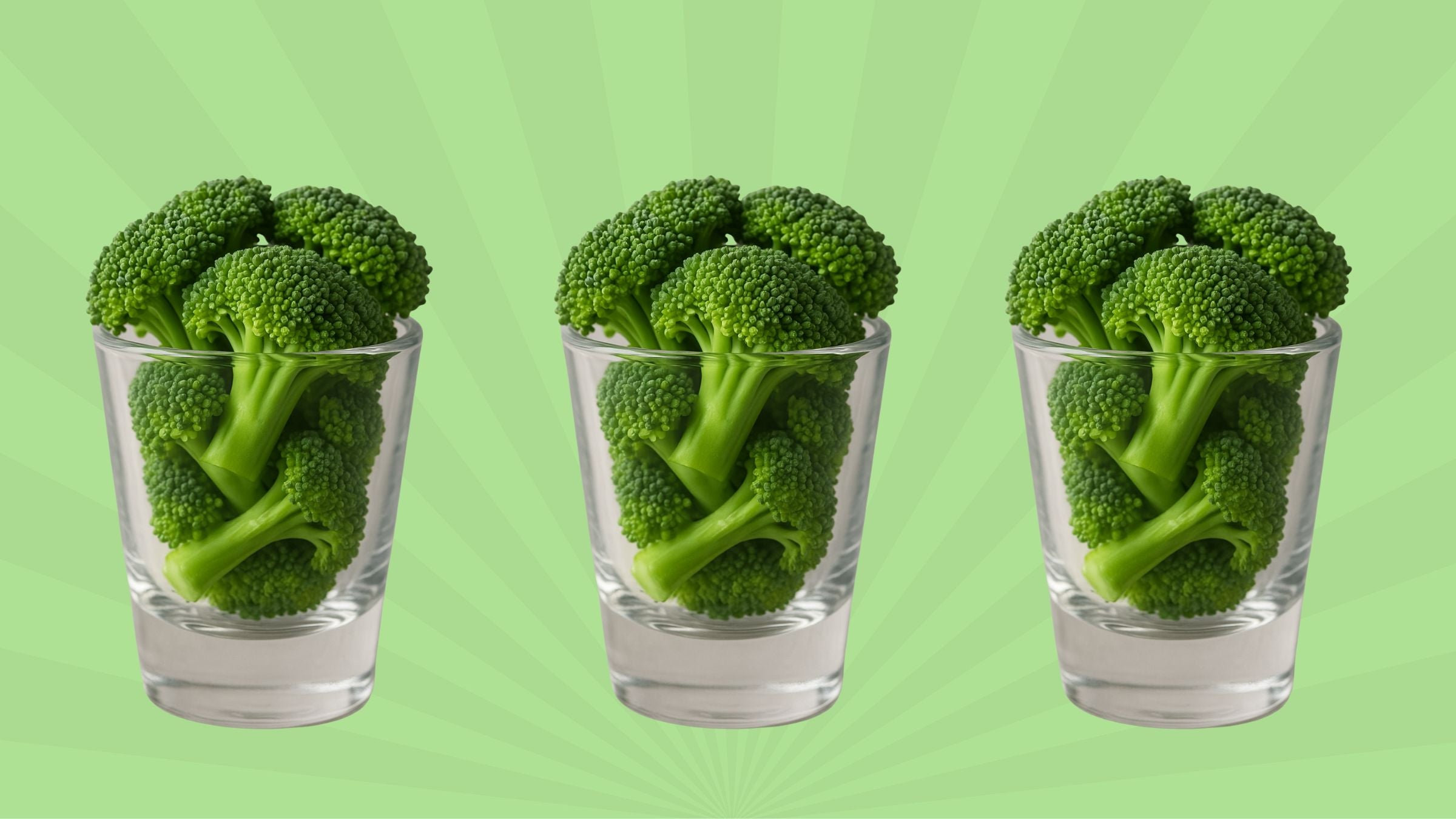
That query is what led to the 2023 research talked about above. As hypothesized, ITCs appeared to guard individuals from oxidative stress throughout heavy coaching. However the different advantages—higher blood sugar management, and particularly decrease lactate throughout train—had been stunning. That’s what prompted the second research, the place even a single dose of ITCs—as a lot as you’d get from about six kilos of uncooked broccoli, packed right into a shot glass-sized container—lowered lactate throughout train.
Larsen and his colleagues nonetheless aren’t positive why ITCs decrease lactate; there are a couple of doable biochemical explanations, however none has been confirmed but. The consequences are most obvious when lactate concentrations are in an intermediate vary between about 3 and eight millimolar, which corresponds to reasonably laborious however not all-out paces of the sort you’d see in efforts lasting between about ten minutes and some hours. (In distinction, the largest advantages of baking soda are thought to accrue in shorter, extra intense efforts between about one and ten minutes.)
Earlier than these lactate findings popped up, although, the unique cause for making an attempt ITCs was to battle the oxidative stress brought on by laborious coaching. This raises a dilemma, as a result of there’s a well-established physique of proof suggesting that taking excessive doses of antioxidant dietary supplements can really blunt the advantages of coaching. The essential thought is that oxidative stress is a sign that tells your physique to adapt and get stronger, so suppressing that sign by taking antioxidants ends in much less coaching adaptation.
That’s a real concern, Larsen says. However on this case, ITCs aren’t actually antioxidants. In truth, they’re delicate professional-oxidants, similar to train itself. In each circumstances, producing a small quantity of oxidative stress causes the physique’s personal antioxidant defenses, managed by Nrf2, to kick into greater gear. So as an alternative of eliminating coaching’s adaptive sign with an antioxidant, Nomio is making an attempt to amplify that sign. Nonetheless, Larsen says, which means it’s actually solely helpful in the event you’re coaching moderately laborious. “We additionally advocate that athletes solely take it earlier than laborious periods or throughout harder coaching blocks,” Larsen says, “not earlier than straightforward periods or on relaxation days.”
Extra particularly, the corporate’s recommended usage plan has two parts. For the acute advantages, take one shot three hours earlier than a race or laborious exercise. For the persistent adaptive advantages, take one shot day by day throughout laborious coaching blocks, three hours earlier than your foremost exercise, then take a second shot earlier than mattress on laborious exercise days, and no pictures on relaxation or straightforward days. Given the physique’s finely tuned antioxidant steadiness, Larsen says, “I don’t suppose ITC consumption is helpful for wholesome individuals who don’t practice.”
However Does It Truly Work?
Right here’s the place issues get sticky. Within the scientific papers revealed thus far, all now we have is that topics lasted a bit longer in a VO2 max check, which isn’t actually corresponding to a race. Emil Sjölander, one among Nomio’s co-founders, linked me with a couple of scientists who’ve finished or are doing efficiency testing both in academia or skilled biking, however none had been keen to publicly share the outcomes of their testing.
Once I reached out to others who work with skilled endurance athletes, the responses had been combined. Everybody had heard of it, and most had been at the least intrigued. “Their work to date appears well-done and credible… simply not quite a lot of it but,” mentioned Trent Stellingwerff, the chief efficiency officer on the Canadian Sports activities Institute Pacific, who hasn’t but labored with any athletes utilizing Nomio. Essentially the most skeptical individual I spoke to (who requested to not be named) mentioned the info thus far appeared “weak and unconvincing,” however they’re nonetheless planning a research of Nomio’s results this fall—which is an expression of curiosity, if nothing else.
The listing of athletes utilizing it, each with and with out the corporate’s cooperation, is lengthy and rising. Among the many unpaid names Sjölander talked about: Conner Mantz, Clayton Younger, Sarah Corridor, and Graham Blanks. I requested Younger about his experiences, and he admitted sharing my preliminary confusion about what the product’s foremost purpose is. “After studying the analysis papers, it appeared like a lot of the science focused adjustments in mitochondria,” he wrote in an e-mail. “I used to be then stunned to see that it was marketed extra in the direction of lowering lactic acid ranges. Virtually as in the event that they needed to simplify the advertising and label it extra as a bi-carb [i.e. baking soda] various.”
Nonetheless, based mostly on the constructive experiences of a few of his pals and coaching companions, Younger gave it a shot within the lead-up to the World Championships marathon in Tokyo final month, the place he positioned ninth regardless of a tough fall early within the race. “My Tokyo construct was among the finest I’ve ever had, if not the perfect,” he wrote. “My exercises, particularly my velocity exercises on the observe, appear to be higher than ever. That being mentioned, there are such a lot of components that go into coaching, and it’s laborious to say that all of it got here from Nomio.”
Elite biking tends to be extra data-driven than marathoning, and probably the most detailed suggestions I received on Nomio was from a coach working with a UCI World Tour staff, who I agreed to not identify. To this coach, the promise of decrease lactate was not what him. “Biomarkers are one factor, however to know if one thing actually works, it’s laborious to get a lot out of lactate testing,” he mentioned.
As a substitute, the coach was desirous about how the staff carried out in real-world area trials, which included a mixture of reasonable and all-out intervals. They didn’t discover an apparent lower in lactate ranges, however many of the riders reported “a sense that it labored,” and plenty of notched objectively excessive energy outputs in comparison with their common coaching. Proof? Probably not. However the staff isn’t ready for additional proof. “If we wait, any individual else will attempt to use the benefit,” the coach says. “So in our world, you will have to have the ability to work even once you don’t have clear solutions.”
It’s laborious to say something extra definitive than that for now. The anecdotal proof is intriguing, however who amongst us can actually say for positive why we’ve had a very good or dangerous day? “The primary precept is that you will need to not idiot your self—and you’re the best individual to idiot,” as Richard Feynman as soon as mentioned. That’s why we do research with placebos and management teams and so forth. There’s sufficient curiosity in Nomio that these research will come—or, in the event that they don’t, that their absence will change into more and more obtrusive. Till then… broccoli season continues.
For extra Sweat Science, be a part of me on Threads and Facebook, join the email newsletter, and take a look at my new e book The Explorer’s Gene: Why We Seek Big Challenges, New Flavors, and the Blank Spots on the Map.