

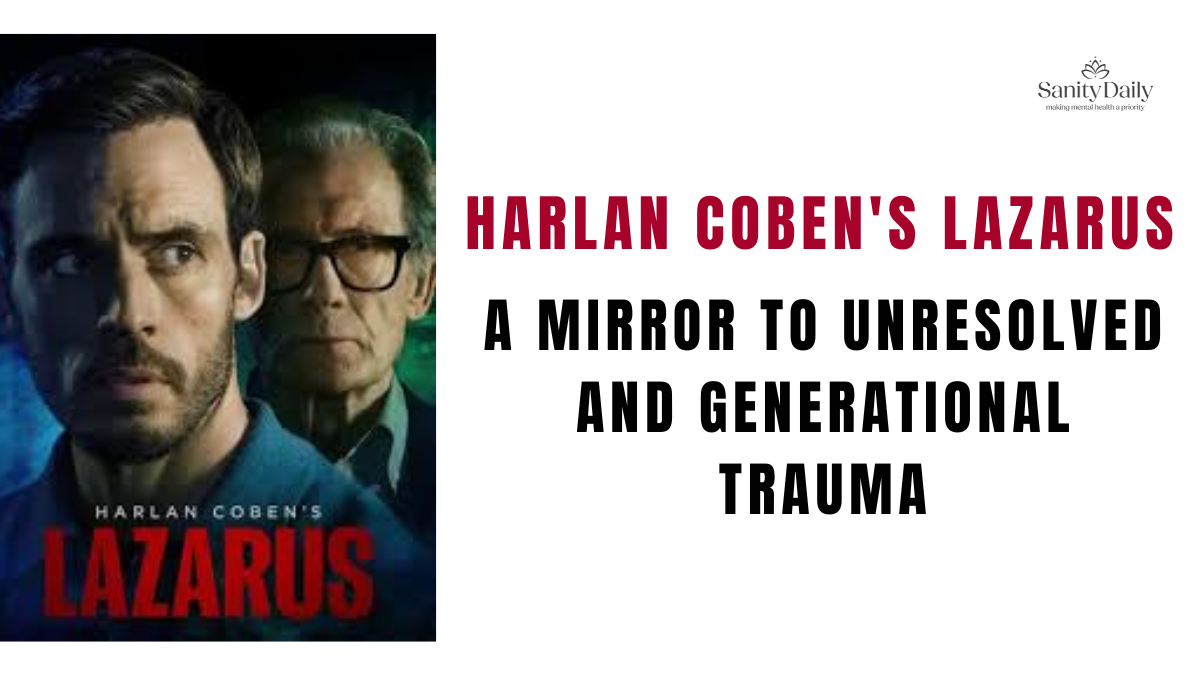

I lately completed watching Harlan Coben’s Lazarus on Amazon Prime, a brief, six-episode collection that lingers lengthy after the credit roll. Whereas it seems to be a psychological thriller or a homicide thriller on the floor, beneath it lies a deeply emotional exploration of unresolved generational trauma, reminiscence, and the load of what we go away unhealed.
The series is a couple of forensic psychiatrist, Joel Lazarus (Sam Claflin), who returns to his hometown after his father’s suicide. He’s haunted by his sister’s unsolved homicide 25 years prior and begins to have disturbing, inexplicable experiences that make him query actuality.
Not spilling the content material and spoiling it for the readers, however the collection brilliantly captures how unresolved trauma may result in generational harm. The layered storytelling by collection Lazarus exhibits how guilt, buried ache and unprocessed feelings silently form {our relationships}, selections, and sense of self. Every character turns into a mirrored image of what occurs when grief and guilt stay unstated how stress seeps into our day by day lives, altering the best way we love, belief, and join with individuals round us.
The weight of generational trauma
I’m studying an attention-grabbing e book presently, The Body Keeps the Score during which the creator psychologist Bessel Van Der Kolk explains that trauma isn’t saved as a narrative in our physique however as sensations and reactions that replay till they’re acknowledged. In Hindu yogic philosophy, it’s known as as ‘sanskar’ physique has a reminiscence.
Equally, fashionable trauma research by Rachel Yehuda and Amy Lehrner, reveals that unresolved emotional wounds can move down biologically and behaviourally instructing the following era our fears as a substitute of our resilience. When left unacknowledged, trauma morphs into inherited concern, perfectionism, avoidance, or emotional withdrawal traits that silently form the following era.
In direction of the top, you will discover a dialogue, which says, “All sons develop into their fathers” and it form of is confirmed to be true by the top of collection, additionally made me replicate how all of the daughters develop into their moms by bearing inherited generational trauma and binds to following poisonous pattens of relationship the place they will selected to interrupt out and do the work for the approaching era.
Studying to reset with out dropping ourselves
Not like the present’s characters, we don’t have the posh of turning again time. However we do have the chance to reset patterns by by opening up, looking for remedy, aware reflection, or compassionate self-inquiry. Practices corresponding to journaling, mindfulness, and self-compassion-based remedy may also help us launch saved rigidity and reframe outdated narratives.
By recognising our triggers and responses, we cease transferring our ache to these round us. We create emotional security for ourselves and, in flip, for the generations to return.
Lazarus could also be a fictional psychological thriller, however its emotional subtext is deeply actual. It’s a mirror held as much as our collective battle with underlying trauma, reminiscence, and that means. It challenges us to ask: what if we stopped rewinding our emotional timelines and selected to stay ahead with consciousness, acceptance, and therapeutic?
Understanding our unresolved trauma isn’t simply an act of self-preservation it’s an act of affection for the generations but to return. The present’s emotional undercurrent jogs my memory that breaking the cycle of generational trauma begins with consciousness. We can not change what we refuse to confront. Therapeutic requires the braveness to look inward, to call what was as soon as unspeakable, and to permit the thoughts and physique to combine previous experiences into current consciousness.
To interrupt a sure sample, we should be taught to call our ache, search assist, and rewrite the narratives we inherited. As a result of if we don’t, the cycles of silence and struggling will proceed quietly shaping the lives of those that come after us.